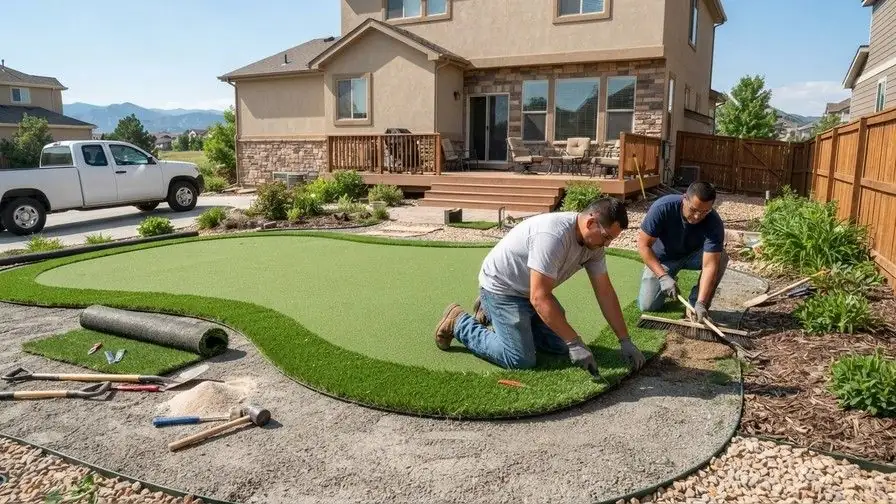
A backyard putting green is a fun project, and some planning keeps it on budget. Here is how Wheat Ridge homeowners can work through the numbers before asking for quotes.
How do I set a budget for a backyard putting green?
A backyard putting green budget starts with the size and the number of cups you truly need, then how much contouring you want. Add fringe turf, a chipping spot or lighting only if they fit. Base work and access show up in every quote. Some homeowners build in phases, putting in the green first and adding fringe or features later. A provider can price a few versions so you can compare.
Figure Out What You Need
Make a list of how you will use the green: short putts, lag putting, chipping or hanging out with friends. A small green with two or three cups handles most practice. Bigger greens with several pin spots add turf, base and labor.
Measure the space and leave room around the edge for walking and fringe.
Where Your Money Goes
Base prep and shaping make up a big part of any green's cost, especially if you want breaks and slopes. Putting turf costs more per square foot than regular lawn turf. Cups, flags and fringe add smaller amounts.
Access counts as well. If materials have to go through a tight gate or up steps, labor rises.
Doing It in Stages
If money is tight, start with a solid green and save fringe, a bunker or lighting for later. Ask the provider to lay it out so future additions fit in neatly.
Having two or three designs priced side by side makes it easier to find the right balance.
Sketching Out Your Green
A clear plan makes quotes easier to compare. When you are ready, an independent local turf provider who covers Wheat Ridge can design and price a green, and we can pass your request along.