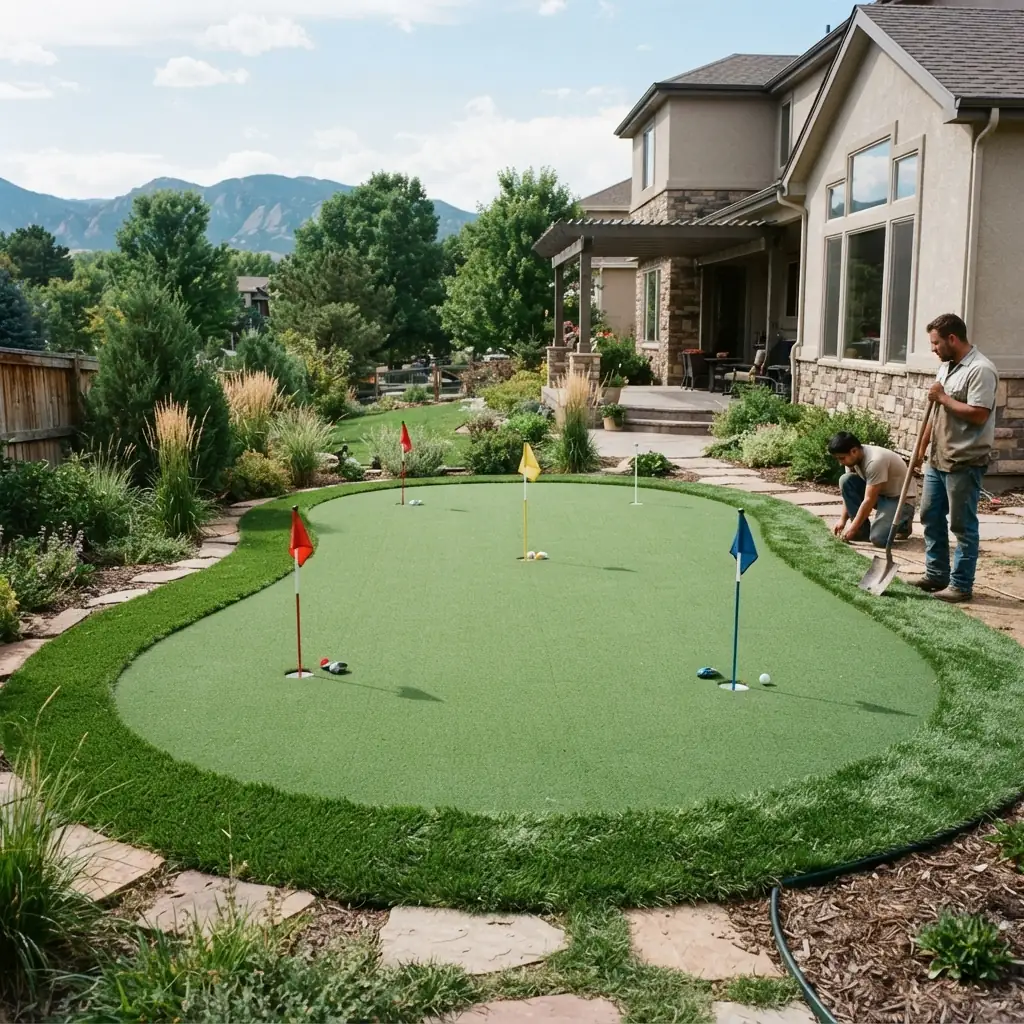
A backyard putting green gives you a spot to roll a few putts whenever you have ten spare minutes. Before you start planning, it helps to understand what pushes the price around. We pass Wheat Ridge requests to an independent local turf provider who designs and prices home greens.
How Big and What Shape
Size sets the baseline. A small green with two cups uses less turf and base material than a big one with several pin spots. Curvy, free form shapes need more cutting and edge work than a simple oval or kidney layout.
Think about how you plan to practice. A short green for lag putts and tap ins fits plenty of yards. A longer one with space to chip in from the lawn takes more room and a larger budget.
Slopes, Cups and Putting Turf
Breaks and slopes make a green fun to play, but they mean more shaping and compacting of the base. Every cup adds a liner, a flag and precise placement. Putting turf comes in several heights and densities that change how quickly the ball rolls.
A fringe collar, a sand bunker or a separate chipping area each add material and labor. Lots of homeowners build the green first and save space to add features later on.
Yard Conditions That Change the Quote
How deep the dig goes, what kind of soil you have and how materials get to the backyard all affect labor. A narrow side gate can mean more wheelbarrow work. Sprinkler lines, tree roots or a slope that has to be leveled can add steps too.
Your written quote should spell out the green size, turf product, base depth, cup count and any fringe or extras so you can weigh options fairly.
Price Out a Putting Green
Send your address, the spot you are thinking of and any features you would like. An independent local turf provider who covers Wheat Ridge gets your request from us and will come out, measure and write a quote.