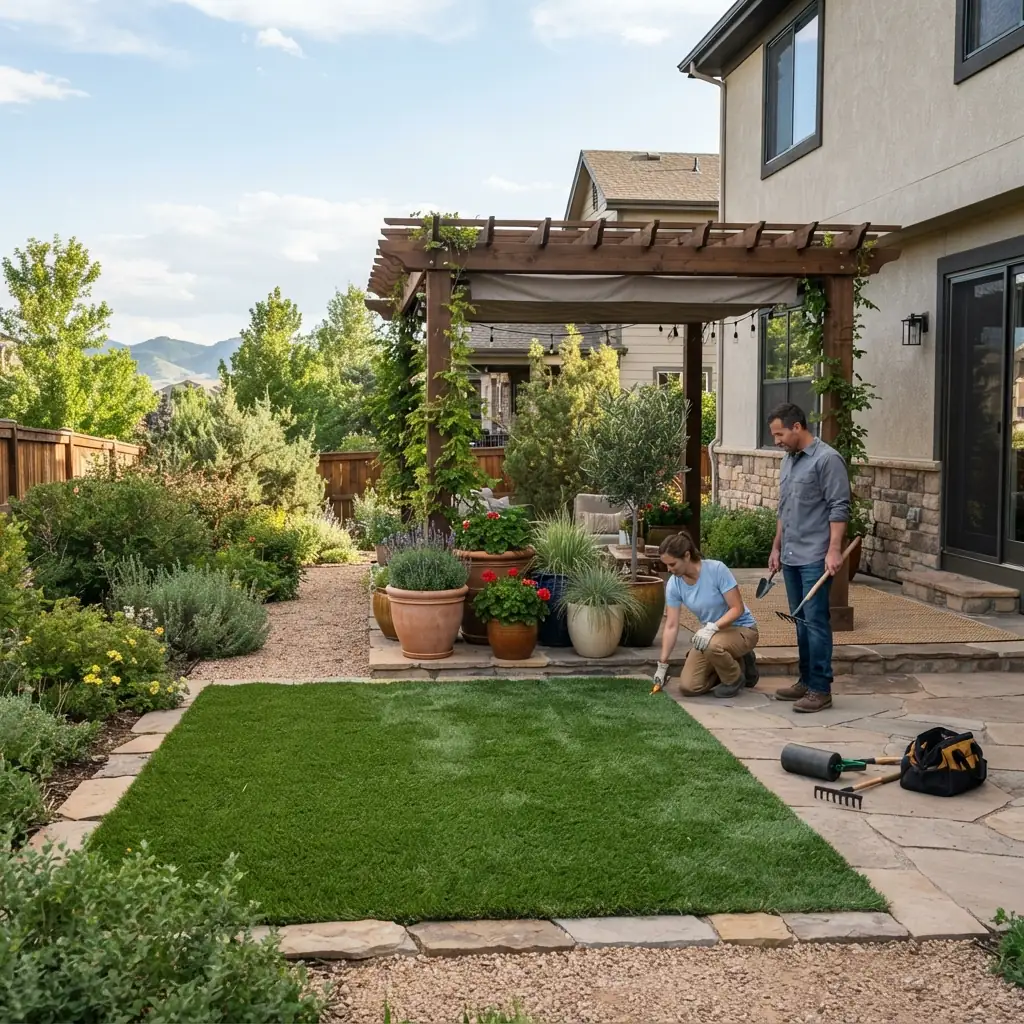
A putting green turns a forgotten corner of the yard into a spot that gets used every week. Synthetic greens use a dense, short putting surface that rolls far more like a real green than any lawn could. We pair Wheat Ridge homeowners with an independent local provider who builds backyard greens, from one cup beside the patio to a bigger green with breaks and a fringe.
Sizing and Shaping a Green for Your Yard
Begin with how you plan to use it. If you mostly want to work on short putts, a small green with one or two cups may be all you need. If lag putting and reading breaks are the goal, a longer green with soft contours makes more sense.
Shape counts too. Kidney and free form outlines look natural and give you different angles to each cup. Leave space for a fringe of longer turf around the outside, which frames the green and stops balls that roll off. The provider can mark a few outlines on the ground so you can picture how each one fits.
Breaks, Speed and Cups
The base under a putting green gets shaped before any turf goes down. Small humps and dips in the compacted gravel create breaks, so a putt across the green curves the way it would on a course. Too much slope makes it frustrating to play, so most backyard greens keep the contours mild.
Green speed comes from the putting turf and its infill. Sand brushed into the fibers firms the surface and lets you fine tune how fast it rolls. Cups sit in sleeves set into the base so they are flush with the surface, and the flags can be pulled when nobody is playing.
Keeping a Synthetic Green in Shape
A putting green needs a little more care than regular landscape turf to keep the roll true. Brush it every so often so the fibers stand evenly and the infill stays spread out. Blow off leaves, pine needles and grit, since debris throws off the ball.
Keep an eye on the area around the cups, which gets the most foot traffic, and add infill there when it thins out. Keep patio chairs, grills and anything sharp off the putting surface. With regular brushing and a quick cleanup after storms, a backyard green stays smooth for years.
Putting Your Green Together
A good backyard green starts with a talk about how you like to practice. Think about the size, where it would go and how many cups you want. The independent local provider we connect Wheat Ridge homeowners with designs and builds backyard greens, and the plan and price come from them.