When people compare turf quotes, they usually zero in on the turf itself. The base matters every bit as much. Here is why base work deserves a close look on any Wheat Ridge turf project.
Why is the base under turf so important?
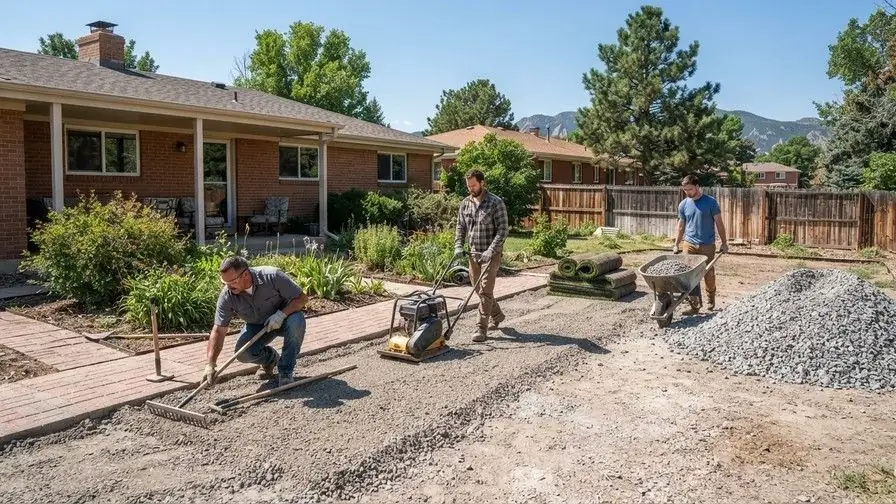
The base under turf decides how it drains, how level it stays and whether it wrinkles or sinks over the years. A good base starts with digging out to the right depth, uses crushed gravel or road base packed in layers and is graded so water flows away from the house. Cutting corners here tends to show up later as puddles, dips and wrinkles. Ask how many layers the provider compacts and what equipment they use.
Drainage Happens Underneath
Water moves through the turf backing and into the base. If the base is too thin or full of fine soil, water hangs around. A clean, compacted crushed gravel base gives it somewhere to go.
That matters even more with the clay soils so common across the Front Range.
Keeping It Level
Packing the base in layers keeps it from sinking. A base that was dumped and raked without real compaction can settle unevenly and leave dips that show through the turf.
Find out how many layers the provider compacts and which equipment they use.
Catching Base Trouble Down the Road
Wrinkles, soft spots and puddles in older turf usually lead back to the base. Fixing them typically means lifting the turf, correcting the base and laying it back down.
Doing the base right the first time saves that extra work.
Do the Base Right
A solid base is what makes a turf yard last. For a quote that spells out the base work, an independent local turf provider who covers Wheat Ridge can help, and we can pass your request along.